

This guide serves as your reference any time you’re writing for Seasonax – from a paid ad to an onboarding email to a partner co-brand.
Who this applies to
- Internal teams: all written communication
- Agencies and freelancers: campaigns, social, landing pages, email
- Partners: co-branded content and integrated messaging
Editorial content (Seasonal Insights, Trading Ideas) follows a slightly different register. External authors should share the same data-driven, accessible, activational values.
Voice Principles
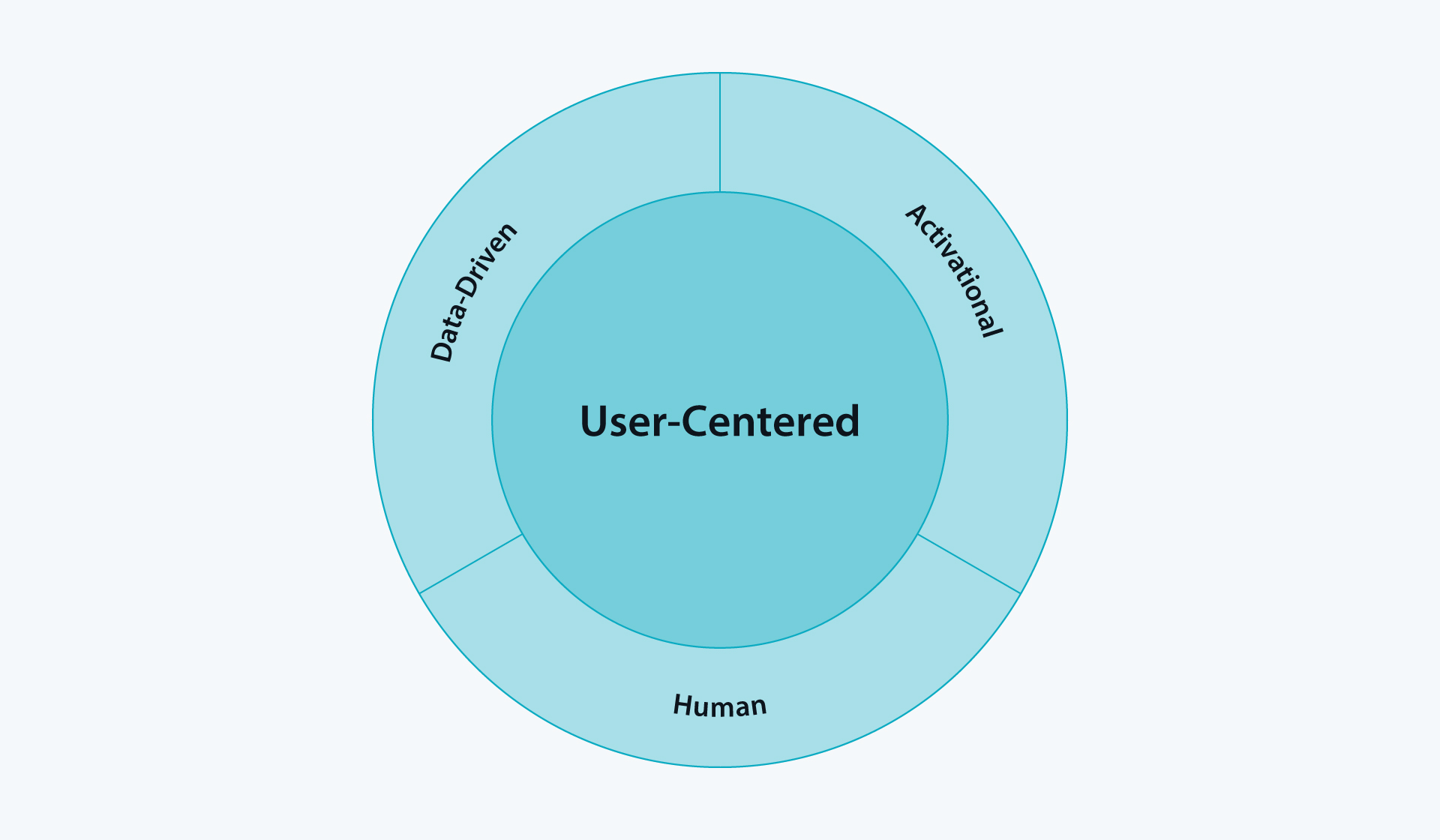
Everything we write is benefit-first: lead with what the reader gains, not what the product does. On top of that, 3 principles shape how we say it.
Data-driven
Ground every statement in evidence. Specificity builds credibility. Vague claims waste both.
✓ Do this “Reveal patterns backed by over 30 years of historical data.”
✓ Do this “Base decisions on seasonal trends validated across 68 markets and 2 centuries.”
✗ Not this “We have the best data in the industry.”
Human/Accessible
Write the way a sharp, confident person talks. No jargon. No passive voice. No corporate padding. Show that there are real people behind this product who understand trading.
✓ Do this “Try the seasonal screener – it shows high-probability setups in seconds.”
✗ Not this “Our platform digitizes pattern recognition processes for users.”
Activational
Move people. Every piece of copy should leave the reader knowing exactly what to do next and feeling ready to do it.
✓ Do this “Uncover your next trading opportunity, today.”
✓ Do this “Start your 30-day trial. No credit card required.”
✗ Not this “We provide seasonal analysis tools for traders.”
Quick reference: benefit-first rewrites
| Principle | Feature-led (avoid) | Benefit-first (use) |
| Data-driven | We offer the best seasonal stock screener. | Spot the best seasonal setups in your target market, backed by decades of data. |
| Human | Our platform digitizes pattern recognition. | Try the seasonal screener and identify the best opportunities in your target market. |
| Activational | We provide the most accurate seasonal charts. | Validate your upcoming trades with the most accurate seasonal data. |
Readability standard
We operate based on data. Therefore, we use the Flesch-Kincaid grade level to keep copy accessible. The target for all marketing is grade 6–8, whenever applicable. This can be approximated with generative AI chatbots and online legibility tools such as https://hemingwayapp.com.
3 levers control your FK score: sentence length, word length, and word frequency. Short sentences with common words score lower. Long sentences with technical terms score higher.
How to hit grade 6–8 in practice
- Keep most sentences under 20 words
- Use common words — prefer use over utilise, check over validate
- Active voice first: the screener finds setups, not setups are found by the screener
- Cut throat-clearing openers: start with the subject, not a preamble
- Prompt the target grade level when you generate content with AI. This framework is well-documented and chatbots are good at using it in practice.
Before and after
| Before (too complex) | Grade | After (on target) | Grade |
| Utilise the platform’s analytical capabilities to validate prospective trade opportunities. | Grade 12 | Use the screener to check trades before you place them. | Grade 5 |
| Leverage two centuries of historical data to substantiate your investment thesis. | Grade 14 | Back your trades with 200 years of seasonal data. | Grade 7 |
Capitalisation
We default to sentence case everywhere since this improves accessibility. Title case is reserved for a small set of high-prominence placements where it’s earned.
When to use title case
- Primary H1 on a website landing page
- Social post title and thumbnail text
Sentence case everywhere else
- All subheadings (H2, H3, H4)
- CTA buttons — Start free trial, not Start Free Trial
- Email subject lines
- Social post copy (body text)
- Body copy, captions, tooltips, navigation labels
Context guide
| Context | Case | Example |
| Landing page H1 | Title case | Unlock Your Seasonal Edge in Trading |
| All other headings | Sentence case | Why seasonal patterns matter |
| Social post title / thumbnail | Title case | 3 Seasonal Trades to Watch This Month |
| Social post copy | Sentence case | Gold tends to rally in Q4. This seasonal pattern is worth exploring. |
| CTA buttons | Sentence case | Start free trial |
| Body copy | Sentence case | The screener surfaces trades in seconds. |
| Email subject lines | Sentence case | Your seasonal edge for this week. |
Grammar and punctuation
Below are some grammar and punctuation rules to follow to ensure consistency, accessibility and a fitting writing style for our target group.
Use contractions
They keep the tone natural, human and reduce cognitive load. It’s, you’re, we’ve — all fine. Formal alternatives like it is and you are add syllables without adding meaning. They also push your FK grade up without any benefit.
Active voice
Active voice is shorter, clearer and easier to process. Passive voice buries the action and adds words readers have to unpick.
✓ Do this “The screener finds the best setups for you.”
✗ Not this “The best setups are surfaced by the screener.”
No Oxford comma
We write: data, patterns and insights — not data, patterns, and insights. The Oxford comma adds a beat that slows readers down. It is used mainly by younger English-speakers and feels less natural to German-speakers.
No em-dashes
Em-dashes interrupt flow and create a pause that’s hard to predict for screen readers. They have also come to be associated with generative AI copy. Use a comma, a colon, or a new sentence instead.
✓ Do this “Try the screener: it surfaces setups in seconds.”
✗ Not this “Try the screener — it surfaces setups in seconds.”
Numerals always
Always use numerals, even for numbers below 10. 3 trades, 7 markets, 1 signal — not three trades. Numerals are faster to scan, easier to process at a glance, and have been shown to outperform written numbers in large-sample ad research.
Emojis
Encouraged sparingly in social copy only — never in website, newsletter, ads or any other channel. When you do use them, treat them as punctuation, not decoration. One emoji that underlines the content is better than 3 that pad a post.
✓ Do this “This Gold pattern might surprise you.➡️ Find out more in our Seasonal Insights.”
✗ Not this “⚜️🥇This Gold pattern might surprise you.✨Find out more in our Seasonal Insights.📈”
Hashtags and cashtags
Use sparingly: 1 to 2 per post, maximum. More than that signals desperation and clutters the post for readers.
Format rules:
- No spaces: #GoldInvesting, not #Gold Investing
- Use title case for multi-word tags so screen readers and people can parse the words: #SeasonalTrading, not #seasonaltrading.
- Cashtags for tickers are all caps with a $ prefix: $GLD, $SPY, $AAPL
- Place hashtags at the end of a paragraph or sentence. Inline hashtags break reading flow and lower comprehension.
- Hashtags have to help people discover the post and the algorithm find out what the post is about. Vanity hashtags like #Seasonax are forbidden.
✓ Do this “Gold tends to rally in Q4. Here’s 30 years of data to back it up. $GLD #GoldInvesting”
✗ Not this “#gold #trading #seasonaltrading #invest #Seasonax #stockmarket Check out our new seasonal gold data!”
Formatting Conventions
How you format copy affects how easy it is to read, just as much as the words themselves do. These rules apply across all channels.
Bullets
Use bullets for parallel lists of 3 or more items. Not for everything. A bulleted list of 2 items is usually 2 sentences. A bulleted list of 8 items is usually a wall.
- All bullet items should be grammatically parallel — all fragments or all full sentences, not mixed
- Start each bullet with the most important word, not a filler like “This” or “We”
- Keep bullets short. If a bullet needs a second sentence, consider whether it should be a section instead
Link text
Link text should describe the destination, not just signal there is one. Screen readers announce links by their text — click here and read more are useless out of context.
✓ Do this “See the full gold seasonal chart”
✗ Not this “Click here to read more”
Number format by locale
| Language | Format | Example |
| English | 9,999.99€ / $15.99 | 10€, 10.50€, $15, $15.99 |
| German | 9.999,99€ | 10€, 10,50€ |